Here's the equipment I am using at the moment. Over the years I have tried a
lot of gear, and this is what I have finally come to trust. Everyone will have
their own opinions about what is faster, quieter, or more accurate, but until
I'm proven wrong this is what I am sticking to.
Click on any of the images to get a larger view.
Fins:
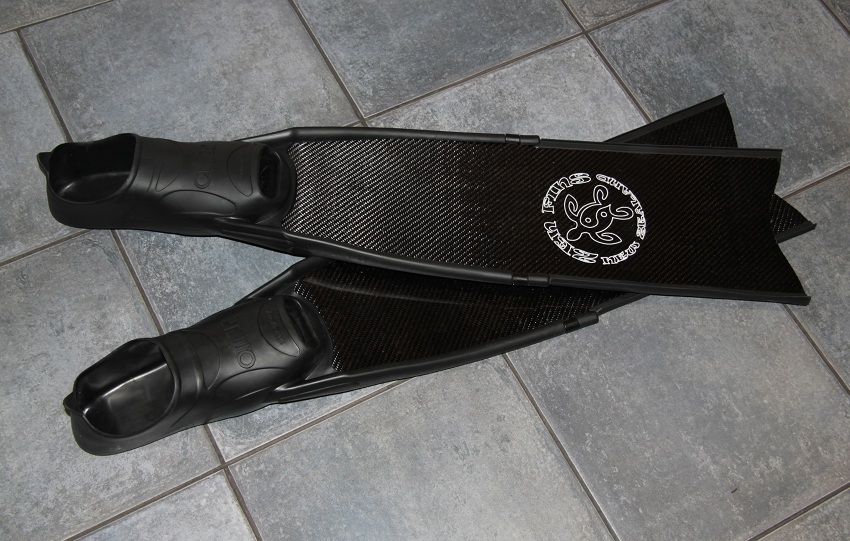
I have gone through quite a few fins, and ended up biting the bullet and getting some custom made. Carbon was the only choice after having a pair of C4's. I also got some fibreglass blades made for knocking around in the shallows looking for paua - no point scratching up your good fins when the glass blades are so cheap.
I got a full run of both carbon and glass fins made, so can offer some for sale. Carbon is medium stiffness - $NZ 375. Glass are also medium stiffness - $NZ 220. Buy a pair of Carbon blades, and I will do you a deal on a pair of glass blades :-)
Zen Fins Carbon blades in a pair of Omer Stingray pockets.
Mask & snorkel:
I use a Cressi Sub Eyes Evolution, and a Cressi Sub Super
Occhio Plus as a backup mask.. I have gone for this brand as it is a better fit on my face than any of the other makes.
Both have all the essentials for
a freediving mask - ultra low volume, black silicone surround, and an easy to
reach nose piece for equalising.
My snorkel started life as a Sporasub model, and has since been shortened, and
had the swivelling mouthpiece taped in one position. Nothing special, but it has
a large diameter tube, and comfortable mouth piece.
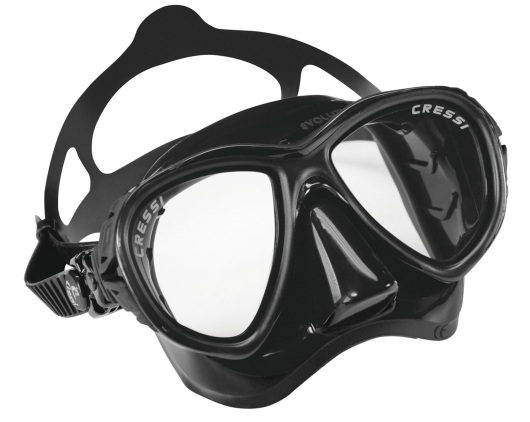
Cressi Eyes Evolution
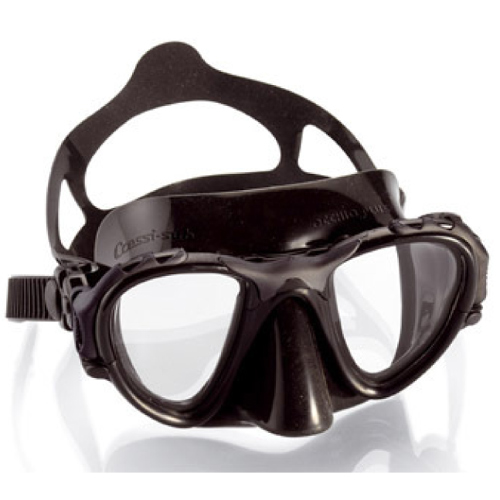
Cressi Occhio Plus
Spearguns:
Gone are the days of using a " it'll do" speargun. I have built a couple of
wooden enclosed track guns. This type of speargun is at the pinnacle of speargun
evolution.
Enclosed track guns have the advantage of not losing accuracy with the addition
of more power, unlike the railgun, or pipe gun type of speargun.
The daily use gun is a 100cm enclosed track with either one or two short 20mm
rubbers. Two rubbers go on this one when the visibility allows the use of the
full range - about 5 meters.
The Kingi / tropics gun is a 150cm enclosed track gun with two 20mm rubbers, and
the option of a tahitian or slip-tip spear. I'm often asked why I need a gun
this size when everyone else is using a 110 or 120cm gun to shoot kingfish -
simply, I get more options to shoot fish as I can shoot through the school to
get the big fish that hang back.
Speargun rubbers:
I use bulk rubber to make all of my speargun rubbers. This is primarily because it is cheaper, but it also allows for fine tuning the amount of power given to the spear. I have put together a "How to" guide for making up your own speargun rubbers.
Weightbelt:
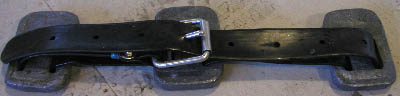
I have in recent times changed from a nylon webbing type belt, to a rubber one, and will never go back to the nylon belt. The rubber belt allows for the compression of your wetsuit at depth, so you don't end up with your belt moving up your body as you dive. The buckle configuration seemed a bit unsecure, but I have had no problems with it in the six months I have had it. I am carrying 3 x 4lb weights which makes be neutrally buoyant at 20ft. If I am diving much deeper than 80ft, I will remove 2 lb from the belt, just to make the ascent a little easier.
Wetsuit:
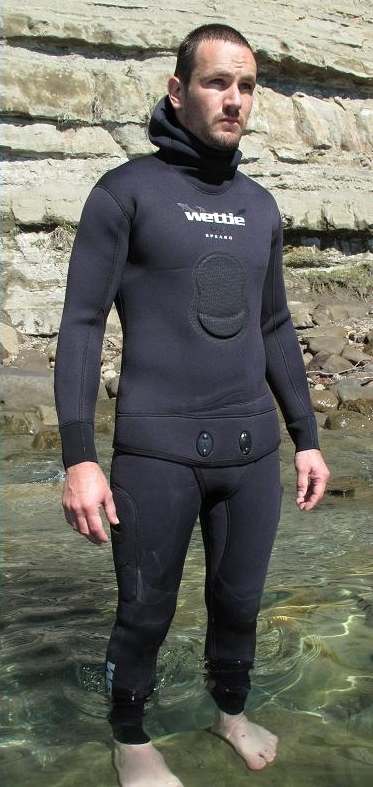
Just replaced my 5 year old made to measure wetsuit from Greece with a locally sourced 5mm 2 piece Wettie branded suit. First impressions are good, with nice open cell rubber used, seals on the wrists, ankles, and face, and 2 x knife pockets. Oh, and the price was very sharp. After a couple of seasons it is showing some cosmetic wear, mostly around the loading pad. Functionally it is still going strong.
Floats:
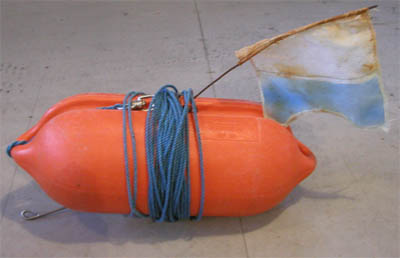
I have three different floats for different situations. Most of the
time I will use my Ronstan plastic float with my flag on it. It has been filled
with foam to stop if from imploding if I happen to shoot something TOO big, and
has 25Meters of 3mm rope on it. It has a stainless fish threader on the gun end,
which doubles as the connection between the gun, and the float line. The float
line has been shackled to the float, so I can change the line if necessary.
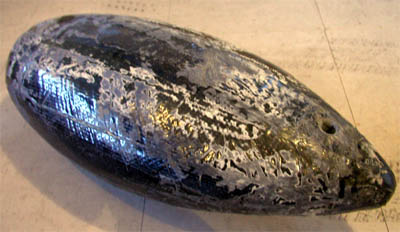
The other float is huge in comparison, and is a custom made carbon fibre over
foam design (similar to racing yachts hence the nickname KZ-7
keel). This still needs to be painted. It
is a joy to tow, and has sufficient buoyancy for me to sit most of the way out
of the water. This gets used in conjunction with my Riffe 75ft bungy, in
anticipation for that world record Yellowtail kingfish.
The third float is a riffe inflatable float, for use when I
travel overseas, and do not have the space for the "KZ-7 keel"
Bungy:
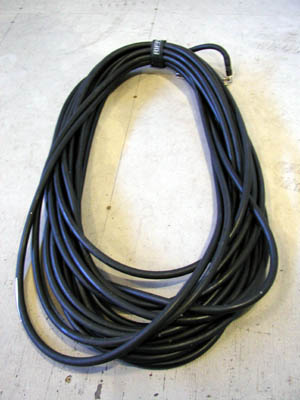
This is a stock standard Riffe 75ft bungy. I have only tried it out on Kingfish up to 60lb, but imagine it would be just as good to use on MUCH bigger prey. All I can say is that once I have the fish on, my job is much easier than with the standard 3mm rope I used to use. The only downside I have come across is the added drag of the bungy when diving in fast currents.
Boots & Gloves:
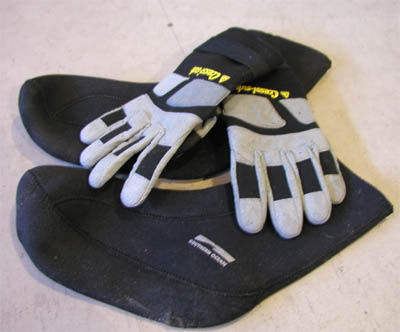
There is not a lot of difference between most brands of boot and gloves. I am using Cressi Sub Amara gloves simply because they were on sale at the time. The Amara (like Suede leather) takes a lot of punishment, and provides good protection, while the rest of the glove is 2mm neoprene, and allows for a good fit & freedom of movement. The boots I am using are 3mm Neoprene socks made by Southern Ocean Wetsuits. These have been blind stitched & glued, so you don't get any seams pressing against your feet.
Camera:
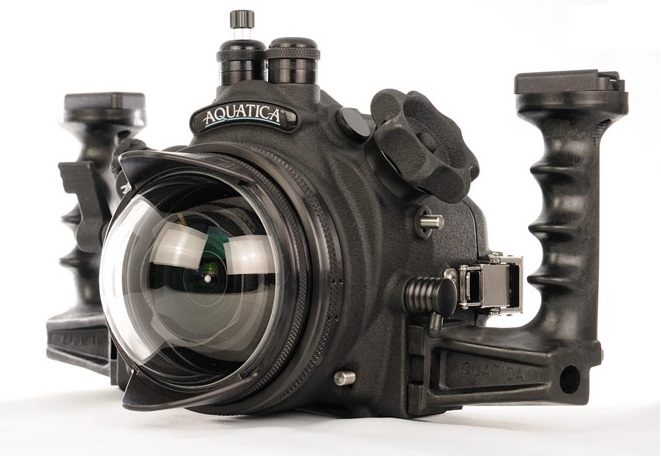
After using a DSLR camera on land for a couple of years, I though it was time
to get a housing for it.
I ended up getting an Aquatica housing, mainly because of the construction of
the housing, and the large accessory list. The dome lens was a 4" mini dome for
use with a Tokina 10-17mm fisheye lens.
This made for a super compact housing to travel with, without compromising on
image quality.
After putting about 2000 photos through this setup, the compact cameras have
been retired as they just cannot compare to the quality, focusing speed, and
lack of shutter lag.